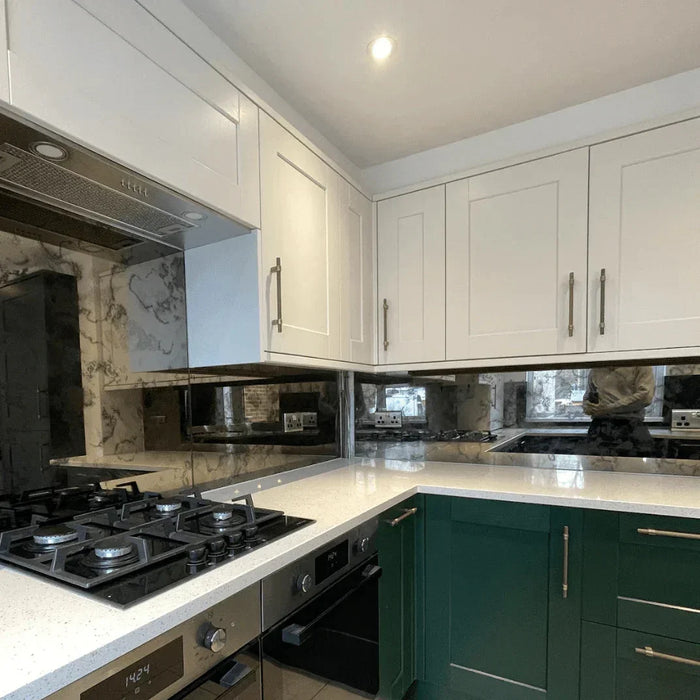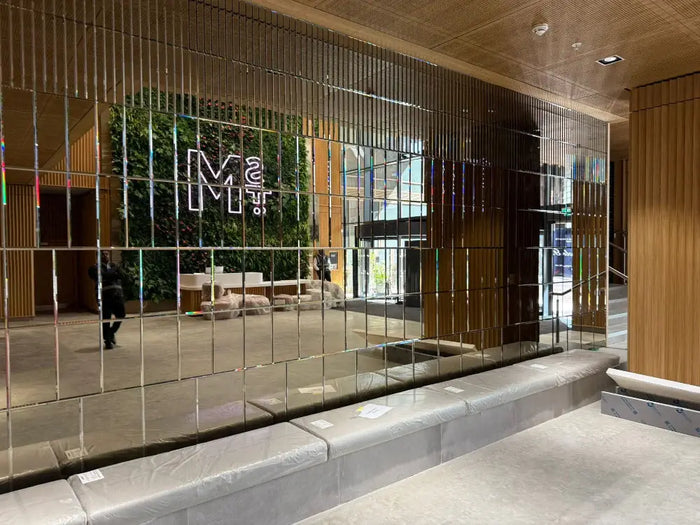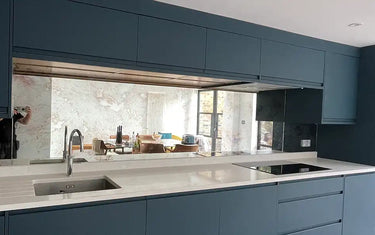
An antique mirror wall can do something ordinary mirror rarely does: reflect light without making the room feel overly sharp or clinical. The aged surface introduces movement, depth and softness, which is why antique mirror is often used as a feature material in dining rooms, bars, hallways, bedrooms and hospitality interiors.
The key is choosing the right tone, panel layout and level of distressing for the room. A bronze antique mirror can feel warm and architectural; silver is usually brighter and more neutral; grey can create a darker, more contemporary effect.
What is an antique mirror wall?
An antique mirror wall is a decorative wall treatment made from mirror panels with an intentionally aged or distressed reflective finish. Instead of one perfectly clear reflection, the surface combines reflective areas with mottling, patina or subtle variation.
The effect can be created across large-format panels, repeated tiles, geometric layouts or individually cut pieces. The final appearance depends not only on the mirror finish but also on the panel size, joint pattern, surrounding lighting and what the mirror is reflecting.
Bronze, silver or grey antique mirror?
Bronze antique mirror
Bronze introduces warmth and works particularly well with timber, brass, natural stone, warm metals and darker cabinetry. It can create a softer reflection than standard silver mirror and often suits dining rooms, bars, bedrooms and luxury hospitality spaces.

Silver antique mirror
Silver keeps more of the brightness associated with a conventional mirror but softens it with an aged pattern. It is useful when the aim is to increase light and perceived space without creating a completely crisp reflection.
Grey antique mirror
Grey antique mirror can feel more restrained and contemporary. It works well with black metal, concrete, charcoal finishes and cooler interiors where bronze would introduce too much warmth.
If you are comparing finishes, view physical samples in the actual room before committing. Antique patterns can change dramatically depending on daylight, artificial lighting and the colours being reflected.
Where antique mirror walls work best
Antique mirror is particularly effective when the wall already has a strong architectural role. Rather than using it everywhere, it is often more successful as a deliberate feature.
- Dining rooms: a mirrored wall can reflect table lighting and decorative objects while the aged finish keeps the result softer.
- Bars and hospitality interiors: bronze and distressed mirror can create atmosphere behind shelving, counters or seating areas.
- Hallways and entrances: mirror can increase the sense of width and light in narrower spaces.
- Bedrooms and dressing rooms: decorative mirror panels can form a feature wall without feeling like a full conventional dressing mirror.
- Staircase landings: geometric or large-format panels can turn an otherwise plain vertical surface into a focal point.
- Furniture and joinery: antique mirror can also be used as cladding to doors, cabinets and selected furniture panels.

Large panels or a tiled mirror wall?
The panel layout changes the character of the wall almost as much as the finish itself.
Large-format panels create a calmer, more architectural result with fewer joints. They suit rooms where the mirror should read as a continuous surface.
Repeated rectangular or square tiles introduce rhythm and can suit traditional, Art Deco-inspired or hospitality interiors.
Geometric and irregular layouts can turn the mirror into wall art, but they require careful planning. Every joint becomes part of the design, so panel proportions should relate to the wall, furniture and architectural lines in the room.

Bevelled edges, polished edges and joints
Edge treatment matters because antique mirror walls are often made from several individual panels. A polished edge keeps the appearance clean and contemporary. A bevel can make each panel read more clearly and can add a more decorative, traditional or jewellery-like quality.
Joint widths, substrate condition and wall flatness also matter. Small variations can become visually obvious across a reflective surface, particularly where long straight joints run through the design.
Lighting changes the mirror more than you might expect
Antique mirror responds strongly to its surroundings. Wall lights, pendants and concealed lighting can pick up the aged areas differently throughout the day. Warm lighting usually enhances bronze tones, while cooler lighting can make silver and grey finishes appear sharper.
Before finalising a wall, consider what the mirror will actually reflect. A mirror facing clutter, an unfinished ceiling or a poorly lit area can amplify those elements. The strongest installations are planned as part of the whole room rather than treated as a decorative surface in isolation.
How a made-to-measure antique mirror wall is planned
- Start with the wall: record overall width and height, skirting, sockets, switches, radiators, doors and other interruptions.
- Choose the visual direction: decide whether the room needs warmth, brightness or a darker reflective effect.
- Select the panel layout: large panels, repeated tiles or a geometric composition.
- Check access: large mirror panels need to reach the installation area safely.
- Confirm final dimensions: for fitted bespoke work, final manufacturing dimensions should be established before production.
- Approve the finish: compare samples in the real lighting conditions before manufacture where possible.
Antique mirror wall or standard mirror wall?
Choose standard silver, bronze or grey mirror when a clean, functional reflection is the priority. Choose antique mirror when reflection is secondary to atmosphere, texture and decorative impact.
For some projects, a combination works well: clearer mirror where practical reflection is useful, with antique mirror used on adjacent feature areas or joinery.
Planning an antique mirror feature wall?
CreoGlass can help with made-to-measure decorative mirror walls, feature mirror panels and specialist mirror layouts for residential and commercial interiors. Send photographs, approximate dimensions, your postcode and any drawings you already have.
Explore feature mirror walls →
Explore antique mirror finishes →
Discuss your mirror project →