A great LED halo mirror wall starts with a drawing, not a light switch. The glass, the wall structure and the electrical provision must all work together. Leave the power feed or fixing method until the end, and an elegant studio feature can become an expensive redesign.
This guide is for anyone planning LED halo gym mirrors for a home gym, boutique personal-training space, Pilates studio or other fitness interior, including homeowners, studio operators, architects and fit-out teams. It focuses on decisions to make before manufacture—not DIY electrical instructions.
QUICK ANSWER: Before requesting a quotation, have a straight-on wall photograph, approximate width and height, a simple floor plan, project postcode, desired lighting effect and any known electrical supply location. Final fixing and electrical details should be resolved through a suitable survey and qualified electrician.
1. What is an LED halo mirror wall?

Halo lighting creates a glow on the wall behind or around a mirror's perimeter. The reflective mirror surface remains conventional; the illuminated space behind it changes how the mirror looks within the room.
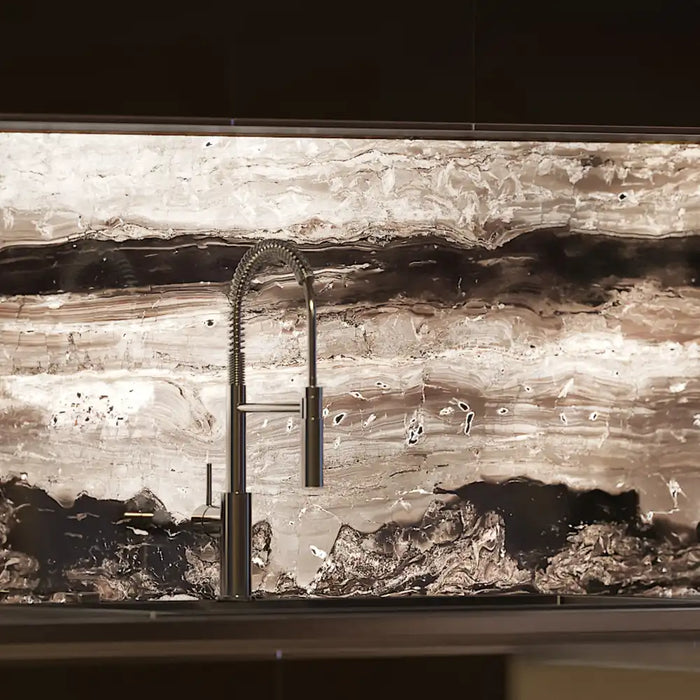
This is different from front-lit vanity mirrors, where lighting is aimed towards the user. It is also different from LED backlit decorative glass feature walls, where light passes through a translucent decorative glass system. Those applications require different detailing.
In most gyms and studios, halo lighting is a design and ambience feature. Do not assume it will replace the general room lighting needed for comfortable, safe training.
2. Draw the mirror wall before specifying the lights
Record the approximate total wall width and height in millimetres, plus skirting, columns, door openings, radiators, screens, sockets, fixed equipment and any change in ceiling height. Photograph the wall straight-on and from the nearest doorway. A sketch with those features marked is valuable even before a measured survey.
For a long wall, multiple carefully aligned mirror panels may be more practical than a single sheet. Joint locations affect the overall rhythm of the wall. Access through doors, corridors and stairs may also limit practical panel size. A designer should consider the room and delivery route together.
The Gym Mirrors collection describes CreoGlass's made-to-measure gym-wall service. For non-illuminated layout and sightline considerations, see the home gym mirror layout guide.

3. Choose the intended halo effect
There is no single visual result called LED halo. You might want a glow around an entire multi-panel mirror wall, around individual mirrors, or only above and beside a defined feature. Those are different designs: a joint, end trim or nearby return wall can change what the finished light line looks like.
Before approving manufacture, request an elevation that shows both mirror divisions and the intended illuminated boundary. Explain whether the glow should read as one continuous line or as repeated panel outlines.
The background wall matters too. A textured wall, a very dark paint and a bright white wall will not reflect light in the same way. Where the exact atmosphere is important, samples or a lighting mock-up are more reliable than a colour swatch viewed on a phone.

4. Agree the electrical feed before glass sign-off
A hidden feed is excellent when the wall is finished—but its location needs to be decided early. Mark the proposed point where power will be brought to the mirror wall and share it with the glass designer and your electrician.
The electrician should confirm the suitable electrical supply, switching and isolation arrangement, whether additional electrical work is needed, and how the selected controls will be connected and tested. A proposed cable location is not an approved installation detail.
Never assume that sockets, drivers and electrical connections can simply be sealed behind inaccessible glass. The selected lighting equipment may have specific requirements for maintenance access, electrical protection, ventilation and isolation. Those need to be incorporated into the final assembly.

For electrical work in dwellings in England, the relevant rules include Approved Document P. Commercial studios also require site-specific electrical safety assessment; the domestic Part P guidance should not be presented as a blanket rule for every business premises. Use a suitably qualified electrician rather than improvising wiring behind a finished mirror.
5. Design the mounting structure for the halo
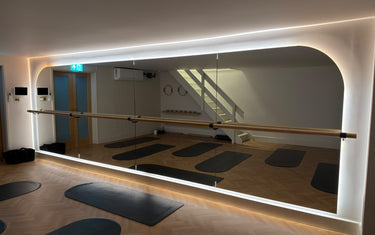
A flush-mounted gym mirror wall and a halo-lit feature wall are not identical assemblies. The illuminated option may need a deliberate space behind the mirror, support points, a suitable wall finish, cable routing and a way of concealing the components without blocking the desired glow. In the removable custom example shown below, a 50 mm stand-off was used specifically to help diffuse LED hotspots and create a more even halo on the wall.
Wall flatness is especially important. If the assembly sits proud of an uneven wall, the halo may accentuate irregular spacing. A survey can identify whether the background surface or supporting structure needs attention before final drawings are signed off.

Standard top-and-bottom J-channels can be an option for some ordinary gym mirrors, but do not assume that a normal J-channel fixing can be combined with halo lighting. In CreoGlass's current gym-mirror specification, J-channels and LED halo are separate, incompatible standard options: an illuminated wall requires a mounting detail designed for that assembly.
For many bespoke gym-wall applications, CreoGlass typically uses 6 mm silver mirror, with polished edges and a project-appropriate safety specification. That is a useful starting point, not a universal rule: final glass, backing, fixing, sizes and wall requirements must be confirmed for the application.


6. Map sockets, switches and fitness equipment
A gym wall can contain hidden complications: speakers, displays, heating controls, alarm devices, power outlets, radiators, reinforcement for wall-mounted equipment and the movement envelope of machines.
Mark every item on the room elevation. Include close-up photographs and, where possible, measurements to fixed reference points. A glass cut-out cannot be moved on site in the same way as a timber trim. Sometimes relocating a socket is preferable to cutting a mirror, but that decision requires both the electrician's and glass designer's input.
The design also needs to account for where people exercise. A perfectly centred mirror on an empty wall may not be centred on the point where a client stands to check form.

7. Select lighting controls with the entire system in mind
A soft warm glow can suit a boutique training space, while a neutral effect may feel better in a bright studio. Apparent colour also changes with the paint finish and the room's other light sources. Ask for the intended colour appearance to be discussed rather than assuming it will match a photograph exactly.
Decide whether simple switching is sufficient or whether you want dimming or colour adjustments. These are specification requests, not guaranteed features of every LED halo mirror. Drivers, LED components, controllers and dimmers need compatible technical selection.
Do not assume that a customer-supplied dimmer will work with an unspecified LED system, or that the halo will provide all the illumination a studio needs.

8. Allow for maintenance and future room changes
Boutique studios evolve. Equipment is rearranged, a new sound system is installed, and a training space may be repainted. Retain the approved drawings showing mirror panel sizes, fixing locations, power-feed position and access arrangements.
On commercial projects, agree who is responsible for wall preparation, electrical first fix, mirror installation, final connections and testing. Clear responsibilities are often as valuable as a clean drawing: they help avoid repeated visits and handover disputes.
9. Include site access and programme in the design
Large sheets require safe handling and realistic access. Tell the supplier about stairs, narrow passages, lifts, restricted parking, opening dimensions and working-hour constraints. A panel design that looks ideal on screen may be impractical for the actual site.
For an occupied training studio, coordinate any necessary electrical, building and glass works rather than committing to an opening date before each part of the installation plan has been checked.

Copy this nine-point pre-survey brief
- PROJECT: Home gym, personal training, Pilates, hotel gym or commercial fitness venue; project postcode.
- WALL: Approximate total width and height in millimetres, plus a straight-on photograph.
- PANELS: Preferred full-wall look, any intentional divisions, doors and columns.
- HALO: Glow around whole wall, selected edges or individual panels.
- CONTROLS: On/off, dimming or colour options requested, subject to confirmation.
- ELECTRICS: Known supply position, proposed feed and electrician contact.
- OBSTRUCTIONS: Sockets, switches, skirting, heaters, screens and wall-mounted equipment.
- ACCESS: Stairs, delivery restrictions, parking and site readiness.
- STYLE: One or two labelled inspiration images, with colours and lighting preferences.
Sending this brief is not a substitute for a professional survey. It makes it much easier to discuss a feasible panel layout and quote without guessing what the existing wall can accommodate.
Why the cost of a halo mirror wall varies
The extra cost is not necessarily just the lighting. A halo system may need a different backing or support arrangement, additional electrical coordination, extra drawings, control components, access provisions and more installation time. Panel count, shaped edges, wall condition and site access can matter as much as the overall mirror area.
A useful quotation therefore starts with drawings and a project brief, not a universal LED price per metre. For the wider non-illuminated and illuminated gym mirror buying context, read Gym Mirror Installation and Costs: UK Buyer’s Guide.
Common mistakes to avoid
- Ordering mirror panels before checking how the power supply reaches the feature.
- Assuming a halo strip can be added to any existing flush-mounted mirror.
- Designing around a reference photograph without checking wall construction.
- Choosing J-channels for a conventional mirror and expecting the same fixing to suit halo lighting.
- Forgetting driver access, switching or how components can be serviced later.
- Depending on decorative glow as the only illumination for exercise.
- Ignoring sockets, equipment clearance or delivery route restrictions.
Questions we often hear
Can I retrofit halo lights behind my existing gym mirrors?
Possibly in a redesigned assembly, but do not treat it as a simple accessory. Existing fixing methods, glass condition, clearance, supply, access and lighting components must be assessed. Replacement or re-engineering may be more practical.
Are LED halo mirror walls right for Pilates studios?
They can make a strong visual feature, but the mirror still has to suit the studio's sightlines and equipment layout. Halo lighting adds ambience rather than replacing appropriate general illumination. See our dedicated Pilates studio mirrors guide for the broader design and installation choices.
Can I specify halo lighting with standard J-channel fixings?
Not as a default CreoGlass gym-mirror combination. An illuminated design requires a reviewed support and lighting assembly; the standard fixing choices for plain mirror panels should not be carried across without technical design.
Does the electrician need to be involved before installation day?
Yes. Electrical supply suitability, cable route, controls, isolation and testing should be coordinated before final manufacture and fitting details are agreed. The installer must use an appropriate electrical professional for the site.
How do I obtain a useful quote?
Send your wall photographs, approximate width and height, floor plan if available, postcode and desired halo effect. Include any known electrical supply location and timeline. CreoGlass can then discuss the design, survey requirements and next quotation step.
Plan the whole wall with CreoGlass
From a compact training room to a boutique studio, good results come from thinking about the mirror, the wall and the lighting together. See the private training studio mirror project and commercial gym mirror project for examples of planned mirror-wall work. These examples are not claims that either project used the exact halo construction described in this guide.
PLANNING AN ILLUMINATED MIRROR WALL? Send CreoGlass a straight-on photograph, approximate dimensions, project postcode, lighting preferences and any floor plan. We will discuss the mirror layout, bespoke specification and survey pathway.
REQUEST A BESPOKE MIRROR QUOTATION · VIEW GYM MIRROR SPECIFICATION
TECHNICAL NOTE: This article is planning guidance, not a wiring diagram or final glass/fixing specification. The electrical installation, component selection and site-specific safety requirements must be assessed and approved by competent professionals. Product options are subject to technical confirmation.