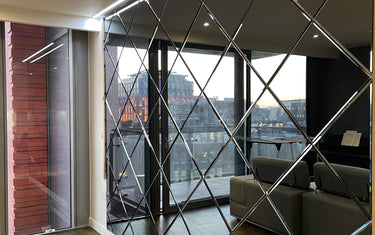
Good living room mirror ideas start with the room, not the mirror. The right mirror can double the light from a window, make a narrow room feel wider, frame a fireplace or turn an awkward alcove into a feature. The wrong one simply reflects the television. This guide covers where to place a mirror in a living room, which sizes and finishes work, how large bespoke mirrors are fixed safely, and what to decide before you order.

Start with what you want the mirror to do
Before choosing a shape or finish, decide the mirror's job. Most living room mirrors do one of four things:
- Bring in light. A mirror on a wall next to or opposite a window spreads daylight deeper into the room.
- Add space. A large mirror on a long wall makes a narrow room read wider, and a full-height mirror makes a low ceiling feel taller.
- Create a focal point. Over a fireplace, behind a sofa or inside an alcove, a mirror can be the centrepiece of the room.
- Add texture and warmth. Tinted, antique and bevelled finishes add character even where there is little to reflect.
Stand where you sit most and look at the wall you have in mind. Whatever is opposite that wall is what the mirror will show you every day.
Nine living room mirror ideas that work
1. A full-height mirror beside the window
Placing a tall mirror on the wall at right angles to a window catches light without the glare of facing it directly. Floor-to-ceiling panels work particularly well in period homes with high ceilings, where they echo the proportions of the windows.

2. Mirror the chimney breast or the alcoves either side
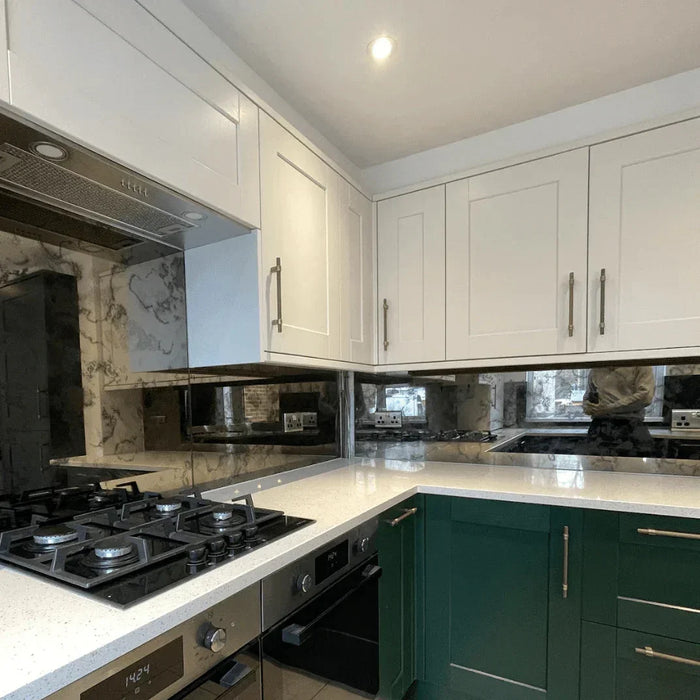
Fitting mirror into the alcoves either side of a chimney breast gives a symmetrical, built-in look and reflects the room back on itself. Mirroring the chimney breast itself above the mantel creates a strong focal point. Antique or bronze finishes keep it from feeling too bright.
3. Cover a whole wall with large panels
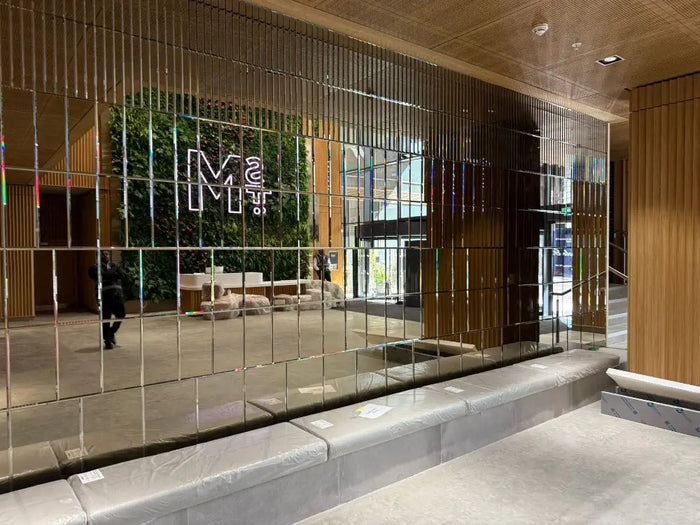
For the biggest effect, a run of large mirror panels across a whole wall can make a living room feel almost twice its size. Large panels with fine joints look calmer than many small pieces. See our feature mirror walls for the formats and finishes available.

4. Bevelled mirror tiles for pattern and sparkle
Bevelled tiles catch light at every edge, so the wall glitters as you move around the room. A diamond or staggered layout adds pattern, and a slim black or brass frame around the edge gives it a finished, architectural look.

5. Geometric panels as wall art
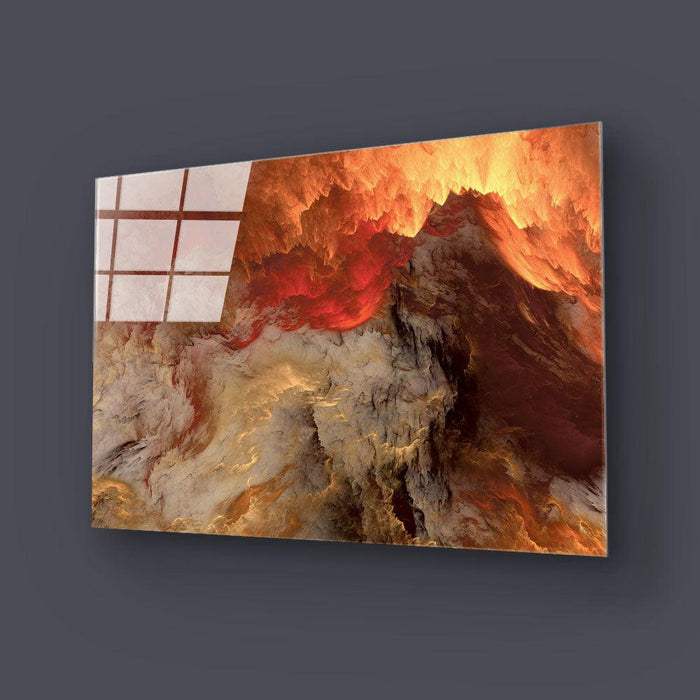
Mirror can be cut into geometric shapes and set out as a composition, so it reads as art rather than a plain reflective surface. Mixed tints within one design add depth, and the layout can be planned around a sofa, sideboard or lighting.

6. Bronze or grey tint for warmth
A plain silver mirror reflects everything exactly. Bronze and grey tints soften the reflection, sit comfortably with timber, velvet and brass, and suit living rooms used mostly in the evening, where a bright reflection can feel cold.

7. Antique mirror for character
Antique mirror has a speckled, aged finish that suits period homes and moody, layered schemes. It hides fingerprints and small imperfections well and still adds light. Our guide to antique mirror walls covers bronze, silver and grey options in more detail, and you can browse antique toughened mirrors by finish.
8. Mirror behind shelving or a bar area
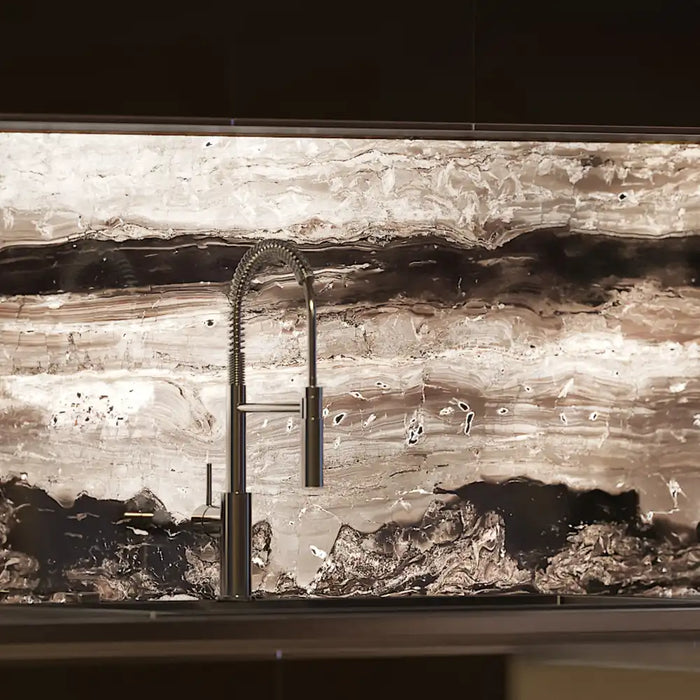
Mirror fitted behind open shelving or a drinks area multiplies the light from integrated lighting and gives displayed objects more depth. A grey or smoked tint works well here because it keeps the focus on the shelves rather than the reflection.
9. Carry the idea through to the hallway
If the living room opens onto a hallway, repeating the same finish there links the two spaces. A narrow hallway gains the most from mirror, and a consistent tint makes the house feel planned rather than decorated room by room.

Where not to put a mirror
- Directly opposite the television. It doubles screen glare and distracts from the picture.
- Opposite a cluttered wall or a radiator. The mirror will show it twice.
- Facing a south or west window head-on. Low afternoon sun can bounce straight back into the room.
- Where people will lean on it. Behind a sofa, leave enough clearance or choose a safety-backed or toughened mirror.
Choosing the right size and format
As a rule of thumb, a mirror above a fireplace or sideboard should be about two thirds of the width of what sits below it. A mirror that covers a wall should run from skirting or floor to ceiling, or line up with an architectural feature such as a picture rail, so it looks intentional.
Large single panels give the cleanest reflection. Several panels with tight joints are easier to handle, deliver and fit, especially up stairs and through narrow doors. Tiles and geometric layouts are best when you want pattern and sparkle more than a true reflection.
Fixing a large mirror safely
A large living room mirror is heavy glass on a wall that people walk past every day, so the fixing matters as much as the finish.
- Safety backing or toughened glass. A safety film on the back holds pieces together if the mirror breaks. Toughened mirror is stronger and breaks into small fragments. Where mirror sits low on a wall or near a door, it may fall within a "critical location" in Approved Document K, which calls for glazing that breaks safely or resists impact.
- The right adhesive and support. Mirrors need a mirror-safe adhesive that won't attack the silvering, and large panels also need mechanical support such as a bottom channel or clips while the adhesive cures and for the life of the mirror.
- A flat, sound wall. Old plaster, uneven walls and dot-and-dab plasterboard can distort the reflection or fail to hold the weight. A backing board or battens may be needed first.
- Cut-outs planned in advance. Sockets, switches and alarm sensors have to be measured and cut into the glass before it is made. They can't be added on site.
This is why large mirrors are usually surveyed before manufacture. Our mirror wall installation service covers measuring, design and fitting within our measure-and-fit area, inside the M25 plus 20 miles.

Frequently asked questions
Where is the best place to put a mirror in a living room?
Usually on a wall next to or at right angles to a window, so it spreads daylight without glare. Above a fireplace or on a long wall that makes the room feel narrow are the other strong choices.
Should a living room mirror face a window?
It can, and it doubles the view, but a mirror facing a sunny window head-on can send glare back into the room. Placing it beside the window is often more comfortable.
What size mirror should go above a fireplace?
About two thirds of the width of the mantel is a reliable guide. For a bolder look, mirror the whole chimney breast or the alcoves either side.
Is a large mirror safe in a family living room?
Yes, when it is specified and fixed properly. Choose safety-backed or toughened mirror, use the right adhesive and mechanical support, and take extra care with low-level panels and those near doors.
Which mirror finish suits a living room best?
Clear silver gives the most light and the truest reflection. Bronze and grey tints feel warmer and softer, and antique mirror adds character and hides marks. Many living rooms suit a tinted finish better than plain silver.
Plan your living room mirror with us
Send us a photo of the wall, a rough measurement and the look you're after. We'll suggest the finish and format that suits the room and give you a photo-based guide price, then arrange a survey before anything is made. Contact CreoGlass to start planning.